

The River as Teacher
Systemic Indigenous Knowledge Intervention
This framework was developed through lifelong experience as a Kanyen'kehà:ka Turtle Clan of Kenhtè:ke, formal education, testing, presentation, and implementation.

Decolonization is a Verb
Most of what gets sold as reconciliation is a supplement: a program beside a program, a policy beside a policy, a land acknowledgement beside an unchanged structure. This work examines the system itself - where knowledge comes from, who holds authority, where responsibility sits, how decisions get made, and who the structure was built to serve. The structure is what has to change, not the people inside it.


"We are Anishinaabe. And we have our own laws. We have our own knowledge systems. We have our own language. We know how to protect these lands. We've been doing it forever since we've been here. And then along comes colonization with that hammer."
Susan Napoleon, Anishinaabe;
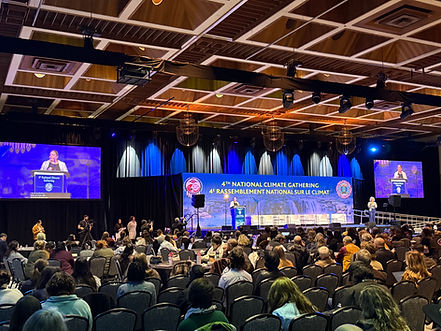
AFN 4th National Climate Gathering

"Canada is not our friend right now."
Grand Council Chief Linda Debassige, Anishinabek Nation, AFN 4th National Climate Gathering

""The elders are the PhDs. I was in residential school, so I was forced to take whatever was offered to me. So now the change that's happening - where they can actually bring in elders into the classrooms, having the kids out on the land."
Chief Robert Charlie-Tetlichi, Inuvik Native Band
AFN 4th National Climate Gathering


Systemic Intervention
The River goes at systems: education, healthcare, justice, child welfare, the arts; any institution built on stolen land and running without the law of the Nation whose land it stands on. The sector doesn't matter, only the structure.
Sha'telayèn:ton Brant designed the framework after the way a river forms and flows. Beginning with what was here before the colonial systems were imposed. it progresses through the points of change throughout history, professionally crafted and adapted specifically for the organization in the room, because every institution arrived at the present by a different route. The organization reflects on where it stands today, looking at where it's going and choosing; accountability or the status quo. Either way, the organization leaves the room having made a decision.
It replaces the one-day event. Institutions are used to a one-day event and nothing after. This framework is built so actual change comes out of the room (policy change, structural change) and continues with support.

"We had our own education system. We have our own laws. We were self-governing."
Chief Robert Charlie-Tetlichi; Assembly of First Nations 4th Annual Climate Forum
"The elders were telling me about a system of consciousness, government, and law, and my professors were telling me that was my perspective. This isn't a perspective. It's a set of principles, protocols, and laws."
Dr. Dawn Martin-Hill; McMaster, Six Nations, Assembly of First Nations 4th Annual Climate Forum

Framework Presentation
Keynotes or a presentation of The River as Teacher is available for conferences, gatherings, and events: the structure, foundations, and implementation model of the framework - First Nations governance and law, how colonial systems impose authority and control, structural analysis and systems mapping, relational accountability, and what structural change looks like instead of symbolic inclusion.
The presentation adapts to the room and the event. It does not include the workshop, an institutional licence, ongoing implementation support, or certification of any kind. Travel and related expenses are additional.
$800.00CAD flat rate; travel is quoted for your location before booking, you know the full cost up front.


Individual Systemic Disruption Training
$1500.00CAD
For educators, administrators, professionals, organizational leaders, and individuals seeking to examine their own practice through The River as Teacher.
This in-person session introduces the framework and provides guided opportunities to examine the participant's role, responsibilities, professional relationships, and the systems in which they work. The work is adapted to the participant's professional context, with questions and practical applications developed around their own responsibilities. Included:
-
Individual facilitated professional learning
-
Introduction to The River as Teacher
-
Guided examination of the participant's professional context
-
Practical application and reflection
-
Certificate of Professional Learning
This is a facilitated professional learning experience. It does not include an institutional licence, ongoing implementation support, or authorization to facilitate the framework independently. Travel and related expenses are additional.


Small Group Systemic Disruption Training
$5000.00CAD (2-10 Participants))
For smaller groups, teams, educators, community organizations, and professionals seeking a shared experience of The River as Teacher. The session introduces the framework and brings participants into an examination of the systems, structures, and relationships connected to their work. Participants work through questions developed around their shared professional context, exploring how the framework applies to their existing responsibilities and practice. Included:
-
Facilitated in-person group session
-
Introduction to The River as Teacher
-
Guided group discussion and reflection
-
Practical application to the group's professional context
-
Advanced Certificate of Professional Learning for each participant
This engagement does not include an institutional licence or ongoing implementation support. Participants receive recognition for their professional learning but are not certified or authorized to deliver the framework to others.
Travel and related expenses are additional. Travel is quoted as a flat rate for your location before booking and you know the full cost up front.


Organizational Systemic Disruption Training
$15,000.00CAD (11-20 Participants: OSDTONE)
For smaller groups, teams, educators, community organizations, and professionals seeking a shared experience of The River as Teacher. The session introduces the framework and brings participants into an examination of the systems, structures, and relationships connected to their work. Participants work through questions developed around their shared professional context, exploring how the framework applies to their existing responsibilities and practice. Included:
-
Facilitated in-person group session
-
Introduction to The River as Teacher
-
Guided group discussion and reflection
-
Practical application to the group's professional context
-
Advanced Certificate of Professional Learning for each participant
This engagement includes an institutional licence and ongoing implementation support. Participants receive recognition for their professional learning but are not certified or authorized to deliver the framework to others. Travel and related expenses are additional. Travel is quoted as a flat rate for your location before booking and you know the full cost up front.

Organizational Systemic Disruption Training
$25,000.00+CAD (21+ Participants: OSDTHREE)
For organizations looking to implement The River as Teacher over a full year, the partnership provides ongoing professional learning, consultation, framework resources, direct implementation support, and a 12-month institutional licence.
The organization is not left to implement the framework independently. Support is built into the partnership, allowing participants to return to the work throughout the year as questions emerge, challenges arise, and changes are considered. The partnership supports organizations in examining their own systems and applying the framework within their existing responsibilities, structures, and professional requirements.
What's Included
Online or In-Person Consultation
Meet with Sha'tekayènton to determine the wants and needs of your organization or institution. All initial consultations are free both online or in person unless travel to your location is required. Allow 5 business days for a reply to inquiry.
The Foundational Day
A full day of in-person work on your territory. The River as Teacher is introduced through its foundational concepts, shared language, and application to the organization's existing structures.
Participants begin examining their own systems, identifying where change is needed, and considering how the framework can inform their ongoing work. This is the beginning of a year-long process of examining and working within the organization's own systems with the intention of systemic change.
Implementation Consultations and Ongoing Support
Twenty, one-hour virtual implementation support meetings are included across the partnership, generally scheduled twice monthly during ten active implementation months within the 12-month term, scheduled around your calendar at the start of the partnership. These sessions provide direct support as the organization puts the framework into practice. Participating organizations receive guidance, opportunities to work through challenges, and support in applying the framework to actual situations as they arise.
Consultations can address planning, decision-making, authority, organizational structures, relationships, institutional barriers, and situations requiring further examination. They also provide opportunities to review progress, reconsider approaches, and identify next steps.
Implementation support is not limited to introducing the framework. Guidance continues throughout the partnership, including agreed communication and follow-up between scheduled consultations within the established scope.
Sector Consultation
The framework meets your system where it actually operates.
Sector consultation maps The River as Teacher onto the real structures:
Education, healthcare, justice and policing, child welfare, the arts and culture, governance and public service.
Examine the structures of your own decision-making, who holds authority, where responsibility sits, and how the nation's law was set aside to build them. The framework does not replace an organization's professional or institutional responsibilities. It provides a way to examine those responsibilities, the structures carrying them, and how they are put into practice.
